Backyard Playground Buying Guide: Surfacing, Safety & Layout for NJ Families
A safe backyard playground comes down to three decisions: a fall-rated surface underneath the equipment, enough clear space around it, and equipment sized to the ages actually using it. Certified playground turf or engineered wood mulch absorb falls far better than a lawn ever will, a use-zone of several feet around every structure keeps swings and slides from becoming collision hazards, and matching equipment height to your kids' ages avoids the single biggest cause of backyard play injuries. Here's how to plan each piece before you buy anything.
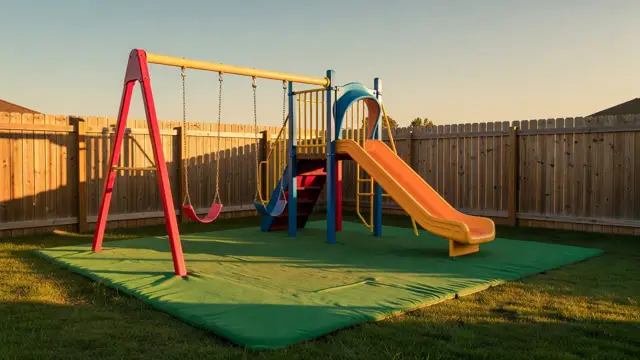
What surface should go under a backyard playground?
The surface under play equipment matters more than the equipment itself. Bare grass, dirt, or concrete offer almost no shock absorption, and a fall from even a few feet onto an unrated surface is where most serious backyard play injuries happen. Public playground standards (ASTM F1292) rate surfacing by the fall height it protects against, and the same logic applies at home.
The two common options are engineered wood mulch and playground-rated synthetic turf. Mulch is inexpensive and absorbs impact well when kept at the right depth, but it compacts over time, migrates out of the play area, can hide sharp debris, and needs to be topped off every year or two. Playground turf — like the Kidscape 1100 we install, an 85 oz/sq. yd. turf rated to ASTM F1292 and certified lead-free — stays at a consistent cushion depth permanently, drains after rain instead of pooling, and never needs replenishing.
Turf built for play areas is different from lawn-grade turf: it pairs a taller, denser pile with a shock-absorbing pad underneath sized to the fall height of the tallest equipment on the surface. That pad, not the grass blades, is what actually does the cushioning.
How much space does a backyard play area actually need?
Every piece of equipment needs a "use zone" of clear, surfaced ground around it — generally at least 6 feet on all sides of climbers and slides, and considerably more in front of and behind swings to cover the arc a child swings through. Two structures placed too close together turn their use zones into overlapping collision paths, which is the most common backyard playground layout mistake.
Before choosing equipment, measure the actual flat, usable footprint of the yard and work backward — it's far cheaper to right-size the play set to the space than to compress swings and climbers into a layout that never had enough clearance.
Wood, metal, or plastic play sets — which holds up in NJ weather?
Wood play sets look natural and are common in NJ backyards, but they need the same freeze-thaw-driven upkeep as a wood deck — periodic sanding, sealing, and hardware checks to catch splinters and loosened bolts before they become a hazard.
Powder-coated metal and molded plastic/resin structures shed water without absorbing it, so they don't warp, splinter, or need refinishing — the tradeoff is a more modern look than traditional wood. Whichever material you choose, the surfacing underneath matters more for safety than the play set material itself.
Is playground turf actually low-maintenance?
Yes — that's the main reason families upgrade from mulch. There's no annual mulch top-off, no raking migrated wood chips back into the fall zone, and no muddy patches where feet land hardest under a swing. Rinse off spills and debris, and an occasional stiff-broom pass keeps the pile standing upright.
Pet- and child-safe infill and a permeable backing mean it drains quickly after rain instead of holding standing water the way compacted mulch can, so the play area is usable again sooner after a storm.
What drives the cost of a backyard playground project?
Total cost comes down to the surfaced square footage, the surfacing material (mulch is cheaper upfront than certified turf, but turf costs less to maintain over time), grading and drainage work if the yard isn't already flat, and the play equipment itself. Because every yard and every equipment choice is different, the fastest way to see real numbers for your project is our free estimate tool, or a quick call for a project-specific quote.
How do I get started planning a backyard play area?
Start with the space you have: measure the flat, usable area, note any slope or drainage issues, and think about the age range the play area needs to serve for the next several years. From there, our playground-grade turf products and design team can help size equipment and surfacing to fit. Browse completed backyard builds in our project portfolio for layout ideas before you commit to a plan.
Ready to plan your play area?
We design and install certified playground turf, safety surfacing, and full backyard play areas across Middlesex, Monmouth, Ocean, Essex, Union, and Bergen counties, plus Brooklyn, Staten Island, and Queens.
More from Turf Boss: our full project portfolio · playground-grade turf products · free estimate tool