Deck Materials Guide: Composite vs. Wood vs. PVC for NJ Backyards
Composite decking is the best all-around choice for most New Jersey backyards — it shrugs off freeze-thaw winters and humid summers without the annual staining wood needs, while costing less upfront than fully synthetic PVC. Pressure-treated wood is the budget entry point but needs the most upkeep, and PVC is the premium, near-zero-maintenance option for decks that take heavy sun or moisture. Here's how the three actually compare, question by question.
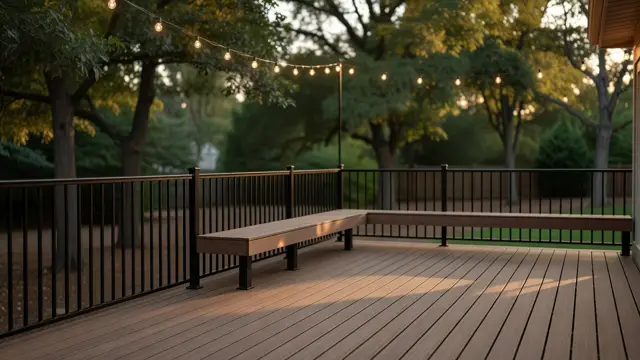
What's the real difference between composite, PVC, and wood decking?
Pressure-treated wood (usually southern yellow pine) is solid lumber chemically treated to resist rot and insects. It's the traditional choice and the cheapest to buy, but it's still wood — it moves with moisture, and the surface is exposed directly to sun and rain.
Composite decking blends wood fibers with recycled plastic, then wraps the board in a protective polymer "cap" on the better product lines. That cap is what actually keeps moisture, mold, and UV out — uncapped composite from decades past is why some homeowners are wary of the category, but capped composite performs very differently.
PVC (cellular vinyl) decking has no wood content at all — it's 100% synthetic polymer. Because there's no organic material to absorb water or feed mold, it's the most moisture-proof of the three, which matters most near pools, on shaded decks, or close to the Jersey Shore's salt air.
How long does each material actually hold up in New Jersey weather?
NJ decks deal with two stresses most regions don't combine: repeated winter freeze-thaw cycles that work at any crack or fastener, and humid, mosquito-season summers that push mold and mildew on anything that stays damp. That combination is hard on wood specifically — untreated checking and splitting lets water in, and freezing water expands and widens the damage every winter.
Properly maintained wood typically needs board replacement and refinishing well before a comparable composite deck does. Capped composite is built to resist that cycle for decades with only light cleaning. PVC, having no wood fiber to begin with, is the most indifferent to freeze-thaw and moisture of the three — it's the material least likely to need anything beyond a rinse for the longest stretch of years.
Which material needs the least maintenance?
Wood is the highest-maintenance option by a wide margin: annual (or every-other-year) sanding, staining, or sealing to keep water out, plus regular checks for splinters, popped nails, and soft spots. Skip a season and the clock on damage starts moving faster.
Composite needs periodic cleaning — a hose-down and occasional soap-and-brush pass to keep pollen, algae, and leaf tannins from staining the cap — but no sanding, staining, or sealing. PVC needs the least of all: rinse it, and it's done. Neither composite nor PVC will splinter, which matters directly if the deck surrounds a pool or serves as a play area.
How does the cost compare?
In relative terms, pressure-treated wood is the lowest upfront material cost of the three, composite runs higher, and PVC is typically the most expensive material per square foot. That ordering flips when you factor in the years of sanding, staining, and board replacement wood requires — composite and PVC cost more to install but far less to own over the life of the deck. Because sizing, railings, stairs, and substructure all move the number for your specific yard, the fastest way to see real figures is our free estimate tool, or a quick call for a project-specific quote.
Does the decking material affect how it pairs with pavers and turf?
Not structurally — any of the three can transition cleanly into a paver patio or a synthetic turf lounge area, which is one of the most requested combinations we build across Central Jersey and the boroughs. What changes is upkeep symmetry: a composite or PVC deck paired with synthetic turf and pavers gives you a backyard with almost no seasonal maintenance at all, since none of the three surfaces need mowing, staining, or resealing.
A wood deck next to turf and pavers still looks great, but you're maintaining one surface on a very different schedule than the other two — worth planning for if low-maintenance is the whole point of the project. Browse full combination builds in our project portfolio.
So which material is right for your backyard?
If budget is the deciding factor and you're comfortable with a yearly maintenance routine, pressure-treated wood remains a reasonable choice. If you want a deck that looks new for decades with minimal upkeep and a natural wood-grain look, capped composite is the sweet spot for most NJ homeowners. If the deck sits in constant shade, near a pool, or close to the shore where moisture and salt air are relentless, PVC's total moisture immunity earns its higher price. Our deck installation team walks every homeowner through samples of all three before anything gets ordered, so the choice is based on how the material feels and looks in hand — not just a spec sheet.
Ready to plan your deck?
We design and build composite, PVC, and wood decks — plus paver and turf combinations — across Middlesex, Monmouth, Ocean, Essex, Union, and Bergen counties, plus Brooklyn, Staten Island, and Queens.
More from Turf Boss: our full project portfolio · deck installation · free estimate tool