Fall Outdoor Maintenance Checklist for New Jersey Homeowners
The short answer: inspect drainage and hardscape in September, clear and rinse synthetic turf before leaves pile up, seal or stain a wood deck before nighttime temps drop below 50°F, and sign a snow removal contract before the first flurries. New Jersey's freeze-thaw winters turn small fall problems into expensive spring repairs — and snow crews fill their routes long before the first storm.
When should fall outdoor maintenance start in New Jersey?
Start in September, before the first hard frost. Inland Middlesex, Monmouth, Union, and Bergen counties typically see their first frost in mid-to-late October; coastal Ocean and Monmouth spots often run a couple of weeks later. That gives you a four-to-six-week window to knock out the jobs that get harder — or impossible — once the ground freezes.
Work through drainage and hardscape first, since both depend on dry, above-freezing conditions. Turf cleanup can wait until most leaves are down. Deck sealing and snow contracts are the two items with hard deadlines — sealant needs warmth to cure, and snow crews stop taking new accounts once routes are full. Contractor schedules also fill up fast once the weather turns, so booking any repair or install work in September beats calling in November and waiting until spring for an opening.
Does synthetic turf need anything before winter?
- Clear leaves and debris regularly. A wet mat of leaves left on turf for weeks can trap moisture against the backing and encourage mold.
- Give it a final deep rinse and brush. A stiff-broom pass against the grain stands the fibers back up before they're matted down all winter under snow.
- Check that drainage perforations aren't clogged with dirt or organic buildup so melting snow has somewhere to go.
- Use a turf-safe de-icer if needed — calcium chloride or a pet-safe product, not coarse rock salt, which can abrade fibers over time.
Beyond that, synthetic turf needs nothing a natural lawn does — no fall aeration, no over-seeding, no fertilizing before dormancy. It's one of the biggest reasons NJ homeowners switch. Heavy leaf-drop trees like oak and maple can bury a lawn fast; a leaf blower on a low setting or a soft-bristle rake clears turf without disturbing the infill underneath. And unlike a natural lawn, freezing temperatures themselves do no damage to quality synthetic turf — it's buried debris and clogged drainage, not the cold, that cause problems.
What fall maintenance do pavers and hardscape need before the first freeze?
- Top off joint sand. Polymeric sand washes and settles over a season; low joints let water in, and repeated freeze-thaw cycles heave the pavers next to them.
- Clear leaves and organic debris from paver and natural stone surfaces — tannins from wet leaves can stain porous stone if left sitting for weeks.
- Confirm drainage still slopes away from the house and any low spots that formed over summer are regraded before they hold water and freeze.
- Inspect retaining walls for new leaning, bulging, or displaced caps — frost heave is the single biggest cause of wall movement in NJ, and it's far cheaper to catch in fall than to rebuild in spring.
- Cover or store outdoor kitchen components and furniture that aren't rated for freeze-thaw cycles, and shut off exterior water lines to any built-in features before the first freeze.
None of this is glamorous work, but it's the difference between a hardscape that looks the same in five years and one that needs joint repair or a rebuilt wall section after two rough winters.
Should you seal or inspect a deck before winter?
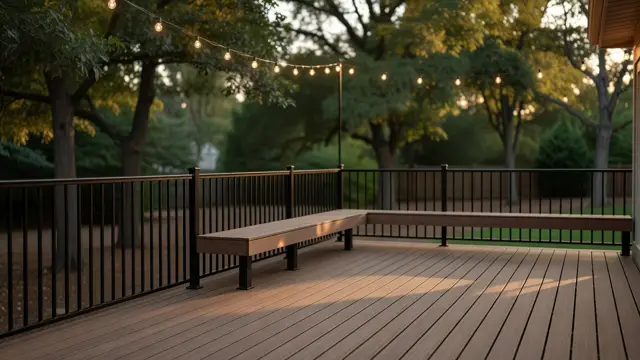
Yes, and the timing matters. Wood decks should be cleaned, inspected for soft or rotting boards, and resealed or stained while daytime temperatures are still reliably above 50°F — most sealants won't cure properly in cold, damp fall air, so waiting too long wastes the product and the labor. While you're out there, check railings, stair treads, and ledger board connections for safety before ice season.
Composite decks skip the sealing step but still need the gaps between boards cleared of trapped leaves and debris, and fasteners checked, so melting snow drains properly instead of pooling against the substructure all winter.
Why sign up for snow removal in fall instead of waiting until December?
Seasonal snow removal contracts for parking lots, retail plazas, HOA communities, and gyms fill route capacity months ahead of the first storm. Signing in September or October locks in flat-rate seasonal pricing and a guaranteed spot on the plow route before demand — and pricing — spikes with the first forecast. Property managers who wait until December are often choosing between overpriced per-push emergency service and no coverage at all.
Early sign-up also means equipment and crews are pre-assigned to your address before the first storm, instead of being routed on the fly during a live event. See our commercial snow removal page for contract options across Central NJ and NYC.
Get Your Property Fall-Ready
Free, no-obligation estimates for turf, hardscape, decks, and snow removal contracts across Middlesex, Monmouth, Ocean, Essex, Union, and Bergen counties — plus Brooklyn, Staten Island, and Queens.
More from Turf Boss: all articles · project portfolio · commercial snow removal · winterizing pavers & turf · commercial snow removal contracts